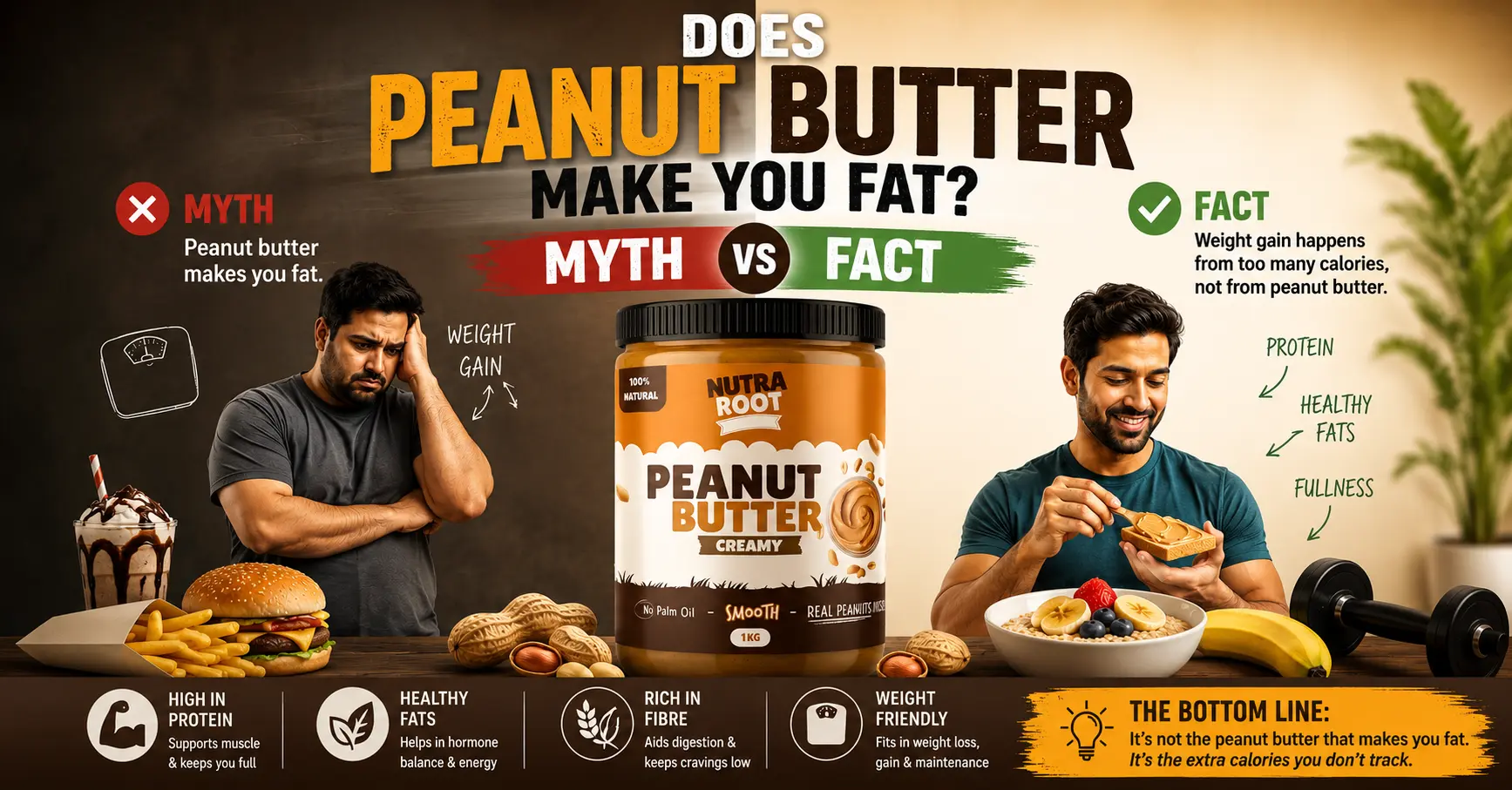
Type "does peanut butter make you fat" into Google and you'll find two completely different answers — one camp says it's a fattening, calorie-bomb snack to avoid. The other says it's a health food you should eat daily. Both can't be right.
The truth is more specific than either camp lets on: peanut butter can make you gain weight, lose weight, or maintain your weight — depending entirely on how much you eat and what it replaces in your diet. Here's what actually determines the outcome.
The Short Answer
Peanut butter does not make you fat by itself. Weight gain happens when you eat more total calories than your body burns — regardless of the source. Peanut butter is calorie-dense (190 calories per 2 tablespoons), so it's easy to overeat without noticing. That's the real risk, not something unique to peanuts.
Eaten in a controlled portion, peanut butter fits into a weight-loss diet, a weight-gain diet, and a maintenance diet equally well.
Why Peanut Butter Gets Blamed
Three things make peanut butter an easy scapegoat:
It's calorie-dense. Two tablespoons (32g) contain around 190 calories — more per gram than rice, chicken, or most vegetables. People see a "high calorie" label and assume "fattening," without accounting for portion size.
It's easy to overeat. Unlike a plate of rice or daal, peanut butter has no built-in portion cue. A "spoonful while walking past the kitchen" can quietly become 6-8 tablespoons a day — 500+ extra calories nobody tracked.
It's often eaten with other high-calorie foods. Peanut butter on white bread with jam, or blended into a sugary milkshake, adds calories from everywhere else in the plate — then peanut butter gets blamed for the whole thing.
None of these are peanut butter's fault. They're portion and context problems that apply to any calorie-dense food — cheese, nuts, olive oil, rice included.
What Actually Determines Weight Gain
Your body doesn't track "was this from peanut butter or biryani." It tracks total calories in versus total calories burned:
| Scenario | Outcome |
|---|---|
| You eat 2 tbsp peanut butter daily, total calories stay at maintenance | No weight change |
| You eat 2 tbsp peanut butter daily, replacing a less nutritious snack | Likely weight maintenance or loss |
| You eat 6+ tbsp peanut butter daily, added on top of your normal diet | Weight gain, because total calories now exceed maintenance |
| You eat 6+ tbsp peanut butter daily as part of a planned surplus (e.g. for muscle building) | Weight gain — the intended outcome |
The peanut butter itself is identical in every row. What changes the outcome is the total calorie context around it.
Does Peanut Butter Actually Help With Weight Loss?
Counterintuitively, yes — for many people it helps more than it hurts, for three reasons:
It's filling. The combination of protein, fat, and fibre slows digestion, so a peanut butter snack keeps you satisfied for hours. This often leads to eating less overall later in the day.
It has a low glycaemic index. Peanut butter doesn't spike blood sugar the way biscuits, samosas, or sugary tea do — so it doesn't trigger the crash-and-crave cycle that leads to overeating.
It's a healthier swap. Replacing butter, jam, or fried snacks with a controlled portion of peanut butter usually lowers total calorie intake, not raises it.
For a deeper breakdown of this, see our guide on peanut butter for weight loss.
Does Peanut Butter Help With Weight Gain?
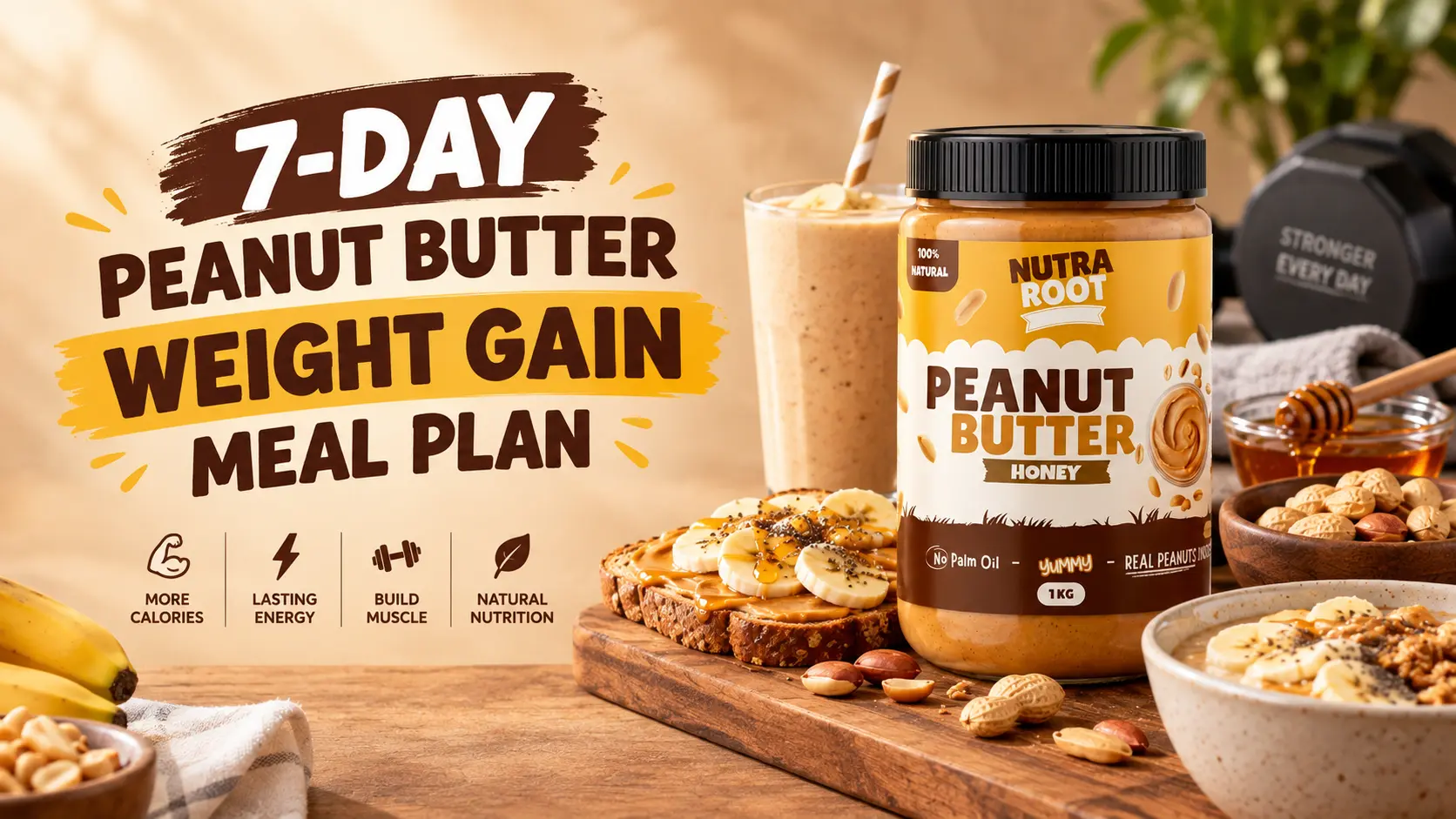
Also yes — when that's the actual goal. For people who struggle to eat enough (hard gainers, underweight individuals, athletes in a bulking phase), peanut butter is one of the most efficient tools available because it packs calories and protein into a small volume of food with zero cooking required.
See our full breakdown on how much peanut butter to eat for weight gain for exact daily amounts and timing.
The One Thing That Actually Matters: What's In the Jar
Here's where peanut butter quality genuinely does change the outcome. Not because it's more or less "fattening" — but because of what else comes along with it:
Pure peanut butter (peanuts, maybe salt) gives you protein and healthy fats with your calories — nutrients your body actually uses.
Commercial peanut butter with palm oil and added sugar gives you the same calorie count, but a portion of those calories come from ingredients with no nutritional benefit — meaning you get the calorie cost without the corresponding protein or fibre payoff.
Two jars can have an identical calorie count on the label and still behave very differently in your diet, because one gives you more nutrition per calorie than the other.
How to Eat Peanut Butter Without Gaining Unwanted Weight
Stick to 1-2 tablespoons per serving if weight maintenance or loss is the goal. This is roughly one heaped tablespoon — smaller than most people assume.
Use a measuring spoon for the first few weeks. Eyeballing peanut butter portions is notoriously inaccurate; most people underestimate by 30-50%.
Replace, don't add. Swap peanut butter in for butter, jam, or a fried snack rather than adding it on top of your existing meals.
Check the ingredients label. Choose a peanut butter with just peanuts, or peanuts and salt — not one padded with palm oil and sugar.

Select a jar size to see Price
Rs.1,799.00 - Rs.2,799.00
Rs.1,299.00 - Rs.2,299.00
Frequently Asked Questions
Does eating peanut butter every day make you gain weight?
Not by itself. Eating peanut butter daily only leads to weight gain if it pushes your total daily calorie intake above what your body burns. At 1-2 tablespoons a day as part of a balanced diet, most people maintain their weight while eating peanut butter daily.
Can peanut butter cause weight gain if I'm trying to lose weight?
Only if you're eating more than your portion allows for. Peanut butter can support weight loss when used at 1-2 tablespoons per serving as a replacement for less nutritious snacks, because its protein and fibre content increase fullness and reduce overall calorie intake.
Is peanut butter fattening?
Peanut butter is calorie-dense, but "fattening" depends on total diet, not any single food. Weight gain happens from a sustained calorie surplus, not from eating peanut butter specifically. In appropriate portions, it fits into weight loss, weight gain, and maintenance diets alike.
How much peanut butter can I eat without gaining weight?
For most adults, 1-2 tablespoons (16-32g) per day fits within a maintenance-level diet when it replaces another snack rather than adding to your existing intake. Exact amounts depend on your individual calorie needs and activity level.
Will banana and peanut butter together make me gain weight?
Only if the combined calories push your daily total above maintenance. A banana with 2 tablespoons of peanut butter is roughly 295 calories — appropriate as a snack for most people, and a common pre- or post-workout combination for both weight loss and weight gain goals.
Bottom Line
Peanut butter doesn't make you fat. Eating more total calories than your body needs does — and peanut butter is simply one of many calorie-dense foods that makes it easy to do that without noticing, if you're not paying attention to portions.
Used correctly — 1-2 tablespoons for weight management, more if you're intentionally trying to gain — NutraRoot organic peanut butter gives you protein and healthy fats with every calorie, unlike commercial brands padded with palm oil and sugar. The jar isn't the problem. The tablespoon count is.
Ready to figure out your ideal amount? Read our guides on peanut butter for weight loss or peanut butter for weight gain depending on your goal.

Ameer Hamza
Founder, NutraRoot
Ameer Hamza is the founder of NutraRoot, personally overseeing production and quality control on every batch. A BS Computer Science graduate with 8+ years of gym and fitness experience, he writes NutraRoot's nutrition content by combining hands-on product knowledge with real dietary and training experience.
NutraRoot Pakistan
Ready to try organic peanut butter?
No palm oil. No preservatives. Delivered across Pakistan.
Shop Now